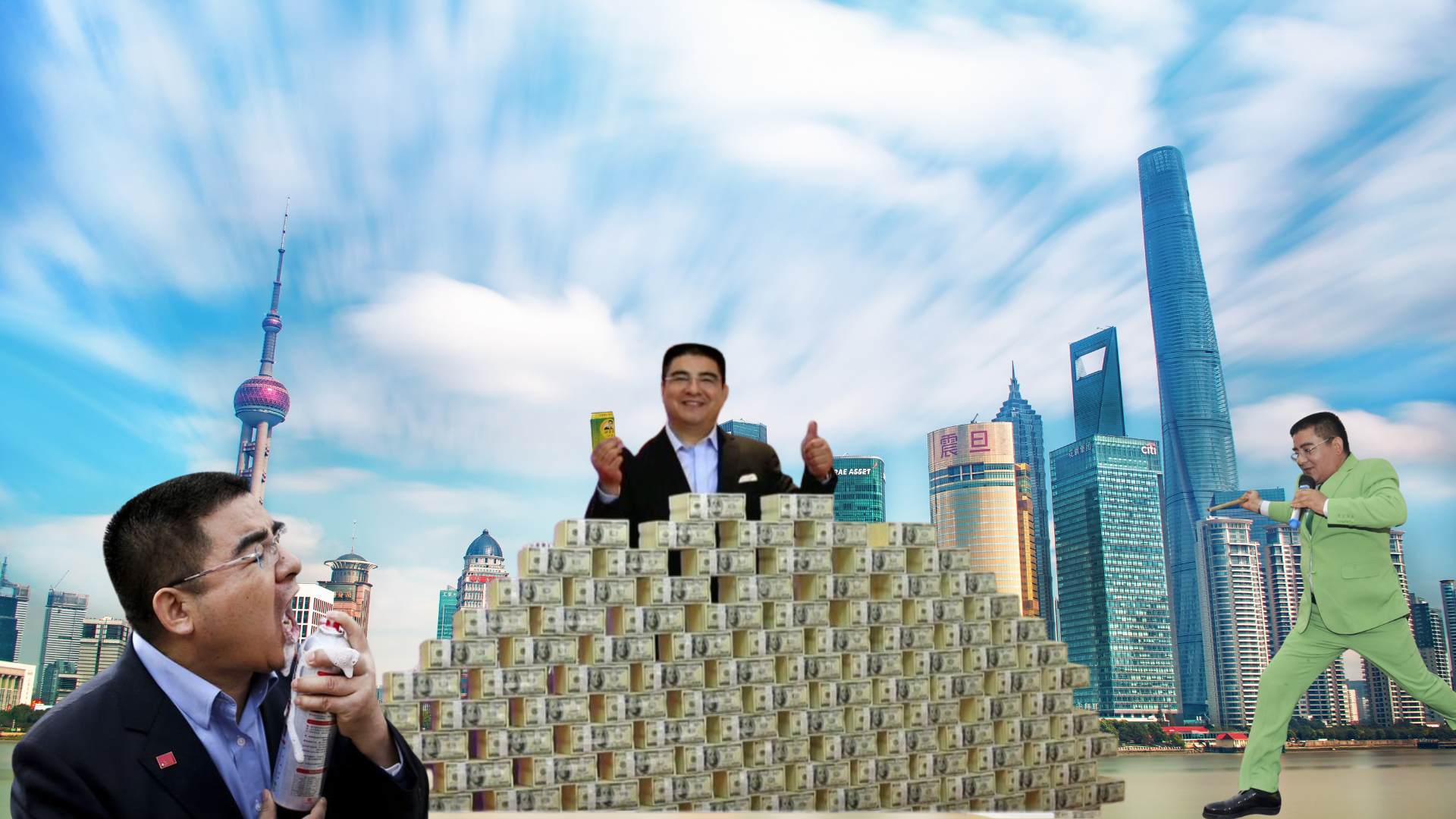
In a world full of entrepreneurs chasing headlines, few have left such a curious trail of fame, fortune, and confusion as Chen Guangbiao.
You may remember him as the man who once sold canned fresh air for $1 in smog-choked Beijing. Or perhaps you recall the time he claimed he wanted to buy The New York Times in 2012. Or maybe you’ve seen photos of him letting cars drive over his body as a publicity stunt.
To many, Chen was simply a quirky billionaire, a showman more interested in odd stunts than serious business. But that surface view misses the bigger picture.
Behind the spectacle lies the story of a man who grew up in poverty, clawed his way into building a multi-million dollar recycling empire, and used an eccentric mix of philanthropy and self-promotion to become one of China’s most talked-about businessmen.
So, what can we, ordinary people chasing success in our own way, learn from his story? Let’s break it down.
From Starving Child to Street Hustler
Chen Guangbiao was not born into wealth. Quite the opposite. He grew up in rural Jiangsu Province, in a family so poor that some of his siblings died of hunger. At the age of 10, while most children were still in school, Chen was already hustling, selling water, ice pops, and small goods on the streets to keep his family alive.
This early adversity forged the relentless drive that would later define his career. He learned quickly that hard work, creativity, and survival instincts were not optional luxuries but life’s only currency.
For readers today, Chen’s childhood is a reminder that success often begins with tiny steps, not giant leaps.
Building an Empire from Scrap
Fast-forward a couple of decades, and Chen transformed from street vendor into a recycling magnate. His company, Jiangsu Huangpu Renewable Resources, specialized in recycling construction waste and eventually employed over 4,000 workers across China.
By 2009, the business was generating an estimated 13.3 billion yuan in annual sales (around US$1.95 billion), according to Chinese media reports. At the time, he was among the country’s wealthiest self-made men. Chen even earned the nickname “Demolition King” for his dominance in the recycling and demolition industries.
While most headlines focus on his eccentric antics, this achievement alone should command respect. He spotted an unsexy but vital niche in waste management and scaled it to industrial proportions.
The lesson here: wealth doesn’t always come from glamorous industries. Sometimes, the biggest opportunities hide in solving messy, overlooked problems.
The Public Stunts That Made Him Famous
Of course, Chen’s rise wasn’t fueled by business alone. What turned him into a global curiosity were his stunts.
- Selling Canned Air (2013): In the middle of China’s smog crisis, he sold “fresh air in a can” for about 5 yuan (roughly 80 cents). It was part satire, part protest, part money-making gimmick, and it worked. He sold out in days while simultaneously drawing attention to pollution.
- The Human Pavement Trick: He once lay on the ground and let cars drive over him to prove his strength. Strange? Yes. Memorable? Absolutely.
- The New York Times Bid (2012): He announced plans to buy The New York Times. Media mocked him as a demolition tycoon with no media background. Whether serious or not, it got the world talking about his name.
For Chen, stunts were not random. They were calculated acts of self-branding, blending humor, shock, and curiosity to grab attention.
The takeaway? In today’s noisy world, standing out matters. But it only works if you tie the spectacle back to something meaningful, like Chen did with environmental awareness and business branding.
Philanthropy as Strategy
Chen called himself “China’s Most Charismatic Philanthropist.” Critics rolled their eyes, but he backed it up with bold acts of giving.
- After the 2008 Sichuan earthquake, Chen donated roughly 100 million yuan (US$15 million) and reportedly spent 54 days in the disaster zone, handing out cash and helping with rescues. This made him a household name in China.
- He staged public giveaways of money, cars, and even iPhones.
- In New York, he once hosted a banquet for homeless people, complete with cash handouts — though this event later drew criticism when many left hungry and disappointed.
To many, this was more showmanship than charity. But there’s no denying it built his reputation, won him media attention, and perhaps even secured government goodwill and contracts.
Lesson here: philanthropy, when combined with business, can be a powerful tool for both impact and visibility. Done authentically, it builds legacy. Done excessively, it risks looking like ego.
Failure, Ego, and Controversy
Not all of Chen’s experiments worked. His New York Times dream fizzled out. Some of his flashy charity events backfired. His over-the-top persona led many to dismiss him as a clown rather than a serious entrepreneur.
Even his claims of donations — which he once boasted exceeded US$300 million between 1998 and 2012 — have been challenged by journalists and watchdog groups as inflated or unverifiable.
But here’s the interesting thing: Chen rarely shied away from criticism. Instead, he turned it into momentum, staying in the spotlight, reframing the story, and pushing forward.
That resilience, even in failure, is a success lesson in itself.
Chen Guangbiao Today
As of 2025, Chen’s recycling empire is no longer at its peak, and newer Chinese entrepreneurs dominate headlines. His personal net worth has been estimated anywhere from US$400 million to over US$800 million in different reports, though his actual fortune is difficult to pin down.
What hasn’t changed is his reputation as a symbol of quirky entrepreneurship, philanthropy-as-marketing, and the Chinese dream of rags-to-riches success. Even if he’s no longer front-page news, his legacy lives on in the way entrepreneurs in China (and elsewhere) use spectacle to amplify their message — and in how environmental issues gained visibility through unconventional means.
Five Success Lessons from Chen Guangbiao
So, what can the rest of us learn from this eccentric millionaire?
Overcome adversity with grit. If Chen could rise from hunger to build an empire, we can face our own smaller setbacks with determination.
Find riches in niches. He made billions of yuan from recycling, proof that everyday problems can hide golden opportunities.
Brand yourself boldly. Quirky or not, Chen’s stunts made him unforgettable. Don’t be afraid to stand out, but always connect it back to real value.
Mix business with purpose. His eco-stunts weren’t just jokes; they drew attention to real issues. Tie your ventures to causes people care about.
Keep learning and adapting. Chen studied both traditional medicine and business administration. Knowledge gave him flexibility to evolve.
Tips for the Average Dreamer
Here’s how you can apply Chen’s quirky wisdom in your own life:
- Start small. Sell a product, offer a service, or test an idea without huge risk.
- Save and reinvest aggressively in yourself: your education, your skills, and your network.
- Look around you. Everyday annoyances could be tomorrow’s million-dollar solutions.
- Don’t fear attention. Share your story boldly, because the world remembers the unusual.
- Anchor your goals in both profit and purpose. Money lasts, but meaning multiplies.
What Do We Take Away From Chen Guangbiao’s Story?
Chen Guangbiao’s life is not a neat business case study. He was part showman, part philanthropist, part hard-nosed businessman. But in that blend lies his secret: success is not only about what you build, but also about how you tell your story.
Whether you admire him or roll your eyes at his antics, Chen forces us to ask: How can we turn hardship into opportunity? How can we stand out in a crowded world? And how can we leave a legacy that is remembered — quirks and all?
Sometimes, the best teacher is not the most conventional one.
© 2025 The Bargain Insider. All rights reserved.
About The Author